Discover a world of possibilities
Concept and performance: Ingrid Hoelzl alias, General Arka, media theorist, performer and artistic director of General Humanity, Visiting Professor at UFBA / Postgraduate Program in Performing Arts
Performance, text & voice: Ingrid Hoelzl alias General Arka Voices & text: Raquel Cascaes and Vóvó Cici de Oxalá
Developed by the Museum of Contemporary Art of Bahia as part of the research project EU/MEUS ORIXÁS, funded by the Hamburg Ministry of Culture and Media (International Cultural Exchange Program) in collaboration with UFBA (Postgraduate Program in Performing Arts) and UFRJ (Dept. of Body Art / Research Group “Ancestralities in Network”)
Scientific Council:
Luciana Duccini (UFBA, Center for Studies in Social Sciences and Health, Afro-Indigenous Studies Group); Arnaud Halloy (Université Côte d’Azur, Laboratoire d’Anthropologie et de Psychologie Cognitives, Cliniques et Sociales).
LINKS
Project page Eu, meus Orixás Instagram announcement MAC Bahia
IMAGE CREDITS PHOTOS AND VIDEO STILLS
Emerson Alan Fernandes Correia and Andrea May (MAC); Joice Aglae Brondani (UFBA); Marly Hofer; Danilo Antar.

CAN

I

be
Iroko?
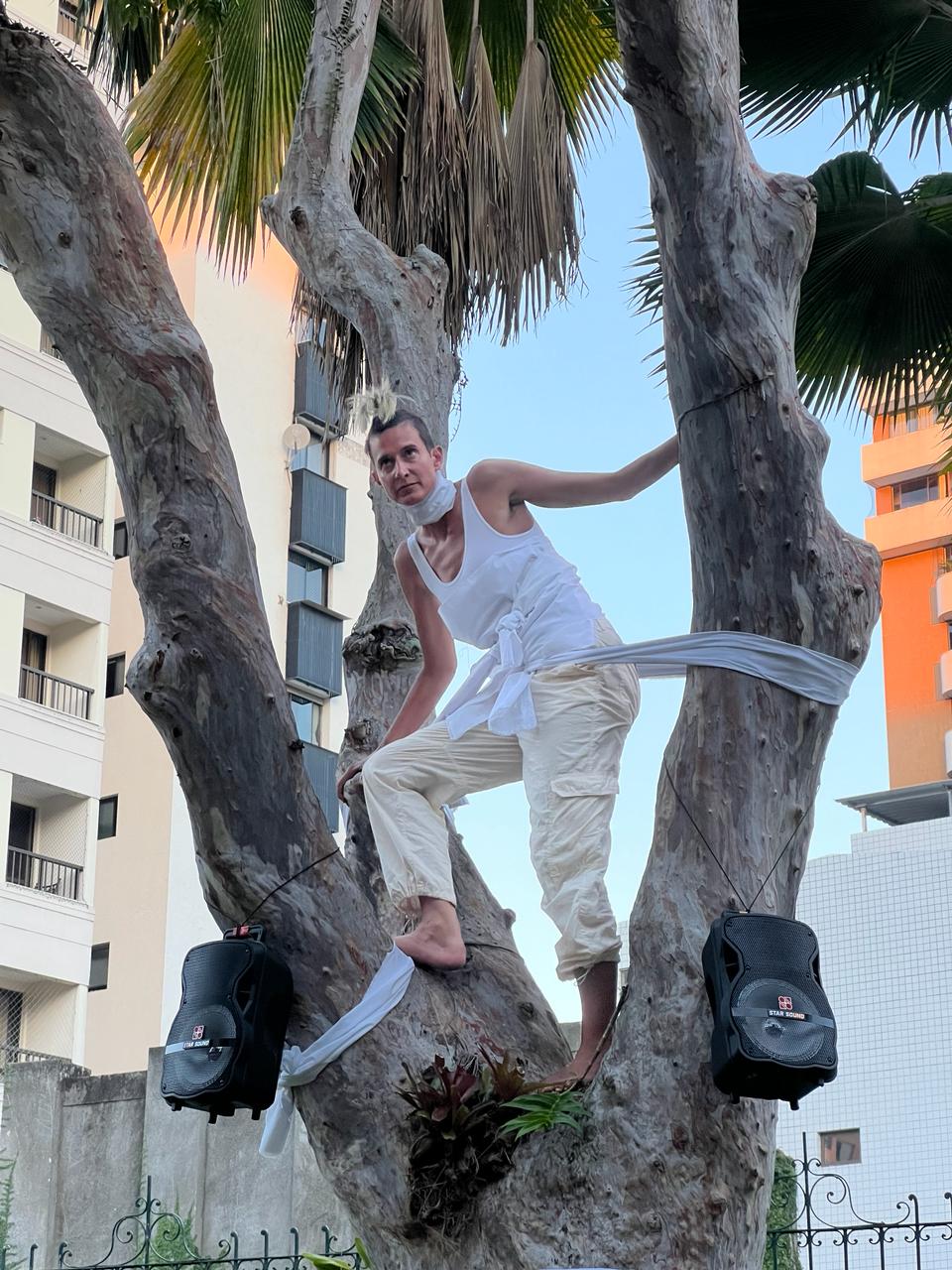
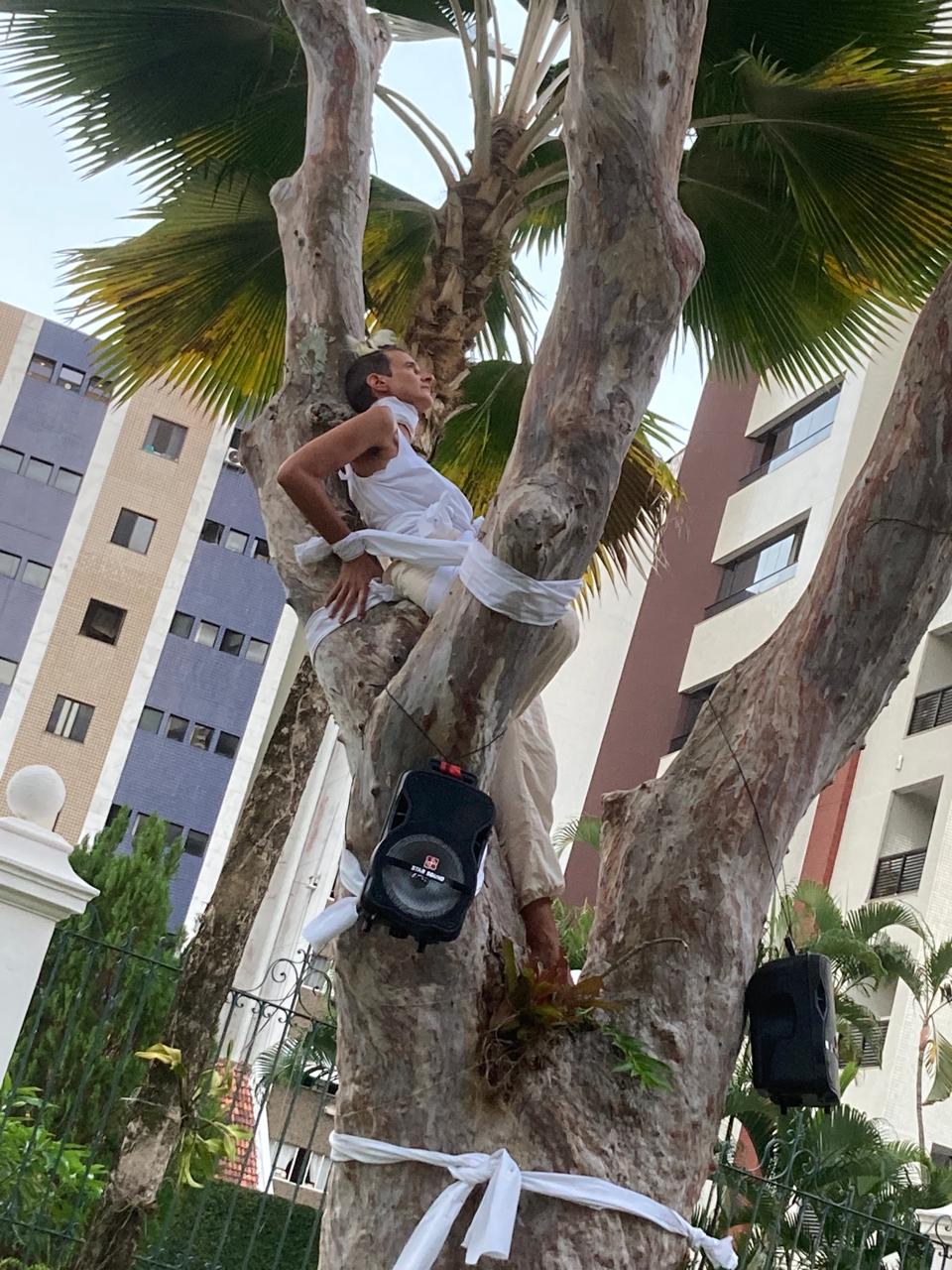
ME, IROKO is a performative interaction around a tree in the outdoor space of the MAC involving trunks and arms (of the tree and of the performer), Ojás (white cloth bands used as ritualistic ornaments of Iroko), and female voices that move between mythical teaching and self-mythography, enchantment and disenchantment. The performance seeks to liberate Iroko from a restrictive phallocentrism and defend her gender fluidity (as a tree, Iroko is female!), based on the feminine power of desire and procreation and on the futurity of the living and the unborn, without whom ancestry would not exist.
In my research into gender fluidity in the myths and ritual practices of Candomblé in Salvador, I came across Iroko, who some terreiros (some nations) venerate as an Orisha, others only as the main sacred tree. Its erect trunk is often associated with the phallus, male virility and fecundity. But biologically, the trunk is just a connecting channel between the roots (the dark world of earth and minerals) and the leaves (the world of air and light). And symbolically, African myths speak of female fertility, aided by the magical powers of the Iroko man who lives in the crown of the oldest Iroko tree. They also say that the Orishas, as deified ancestors, returned to Earth through Iroko, thus symbolizing the connection between heaven and earth, as well as ancestry and the connection between the living and the dead. The performance draws on this ancestry to approach Iroko as a place of multiplicity and transcendence in the sense of transgenerationality between the living, the dead and the unborn, as transcendence or “climbing beyond” the material world.
 GENERAL HUMANITY